In Search campaigns, every keyword gets a Quality Score from 1 to 10. It’s a diagnostic tool – Google is clear that it isn’t an input in the ad auction – but it shows where your ads and website are falling short.
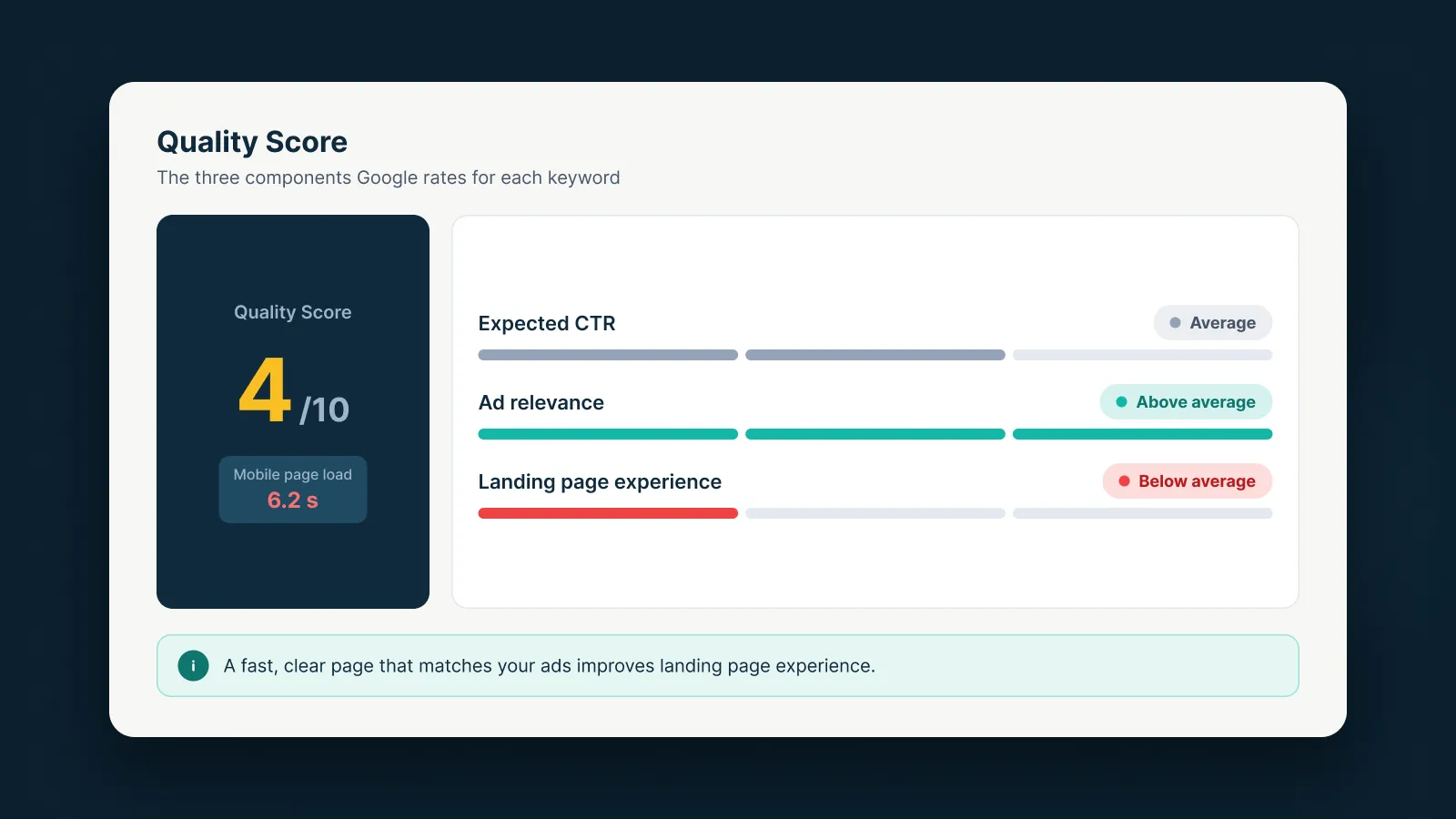
The three components
Each is rated Above average, Average or Below average compared with other advertisers over the last 90 days:
- Expected CTR – how likely your ad is to be clicked.
- Ad relevance – how closely your ad matches the intent behind the search.
- Landing page experience – how relevant and useful your landing page is to people who click.
The third one depends almost entirely on your website.
Improving landing page experience
Following Google’s guidance:
- Give people what they’re looking for – if the ad is about a specific service, land on that service, not a generic homepage.
- Keep the message consistent from ad to page.
- Be mobile friendly – readable text, easy-to-tap buttons, no zooming.
- Load fast – especially on mobile.
- Make navigation easy – visitors should find details, prices and contact options without digging.
Use Google’s PageSpeed Insights to measure speed and get specific suggestions for each page.
Reading the score correctly
- A low score isn’t a penalty; it’s a hint about what to fix.
- Start with the components rated Below average.
- Conversion rate is a useful proxy for landing page experience, even though it isn’t part of the score.
A fast, clear page that matches your ads is the foundation of every effective campaign – and it’s how AdsNest designs websites for clients running Google Ads.
Sources
AdsNest Editorial. Our articles are based on official Google Ads documentation and reviewed regularly. See our Editorial policy.


 Message on Telegram
 Message on WhatsApp